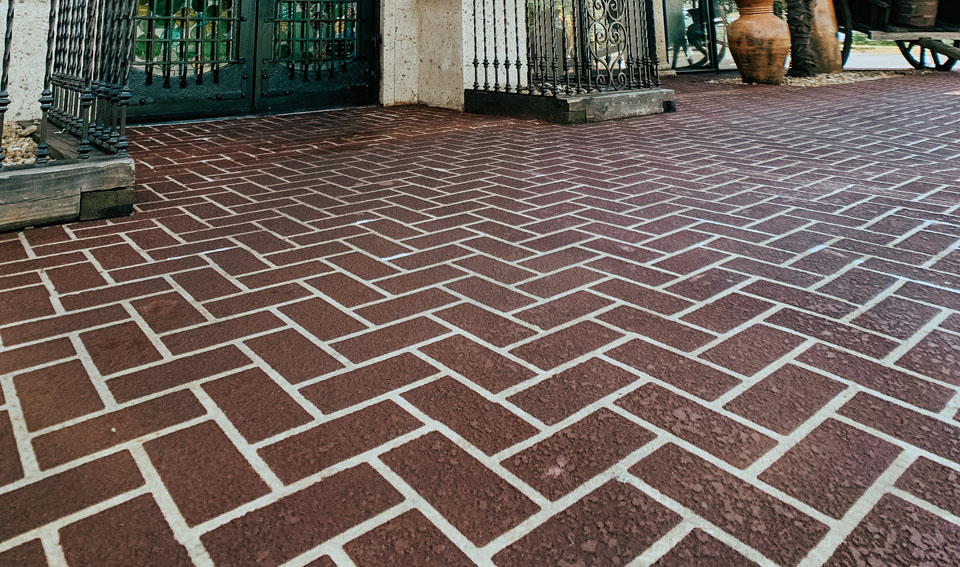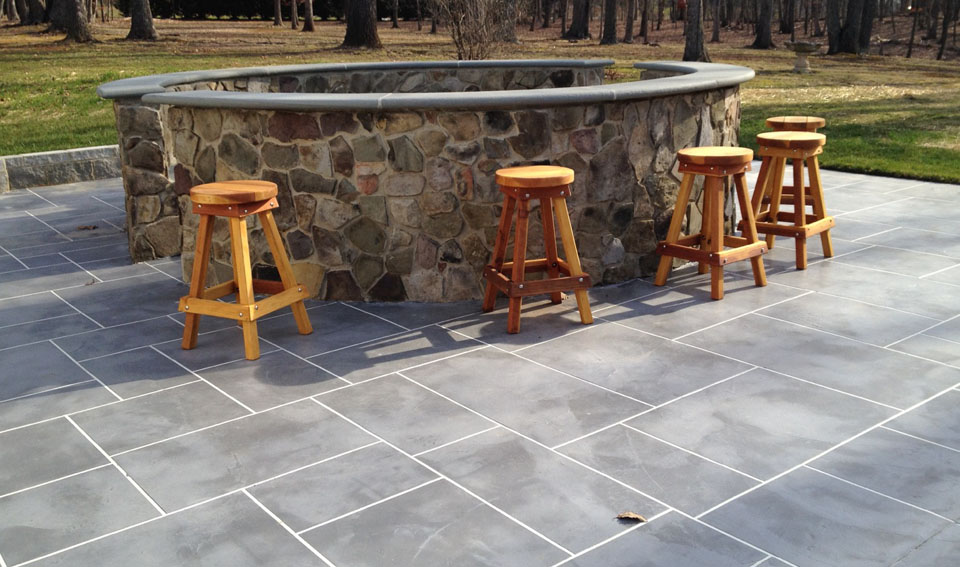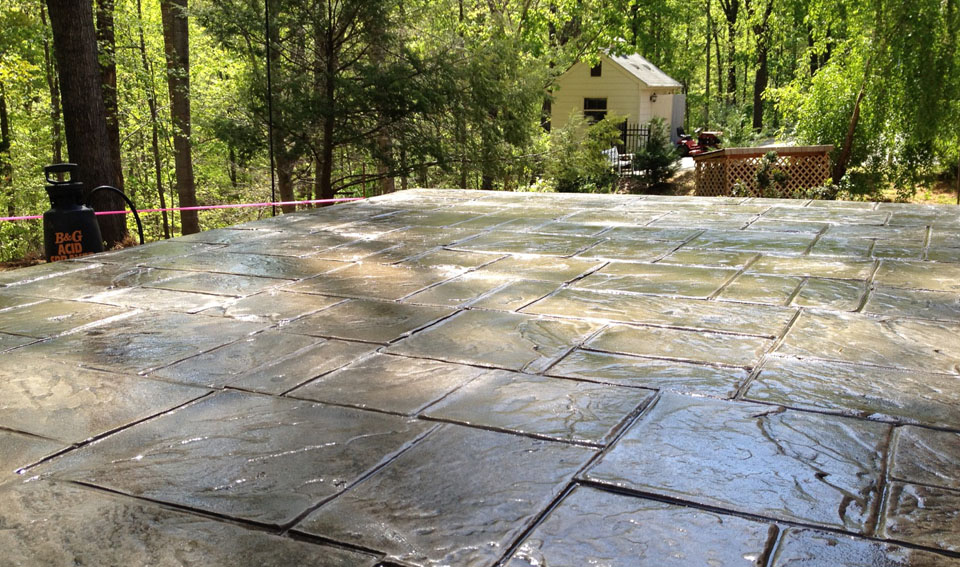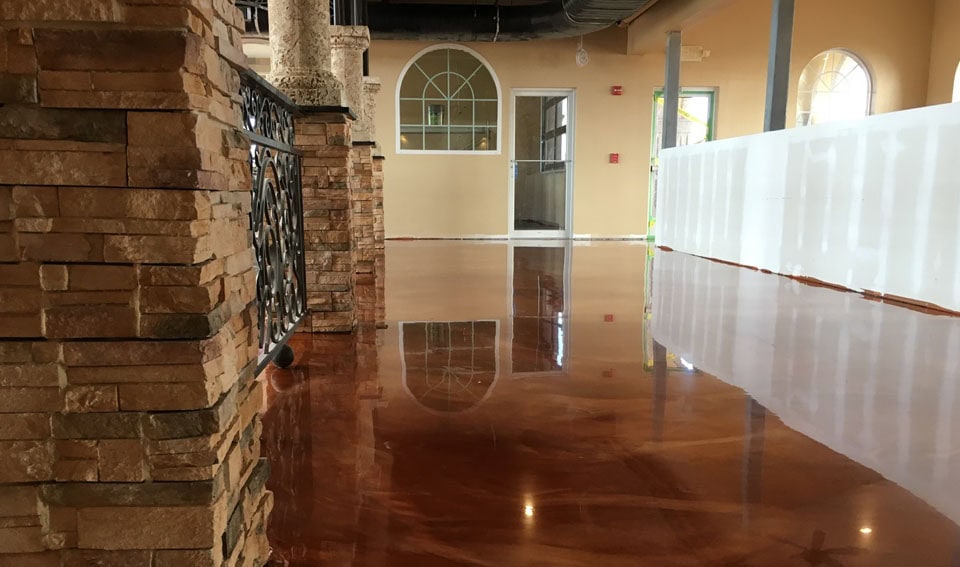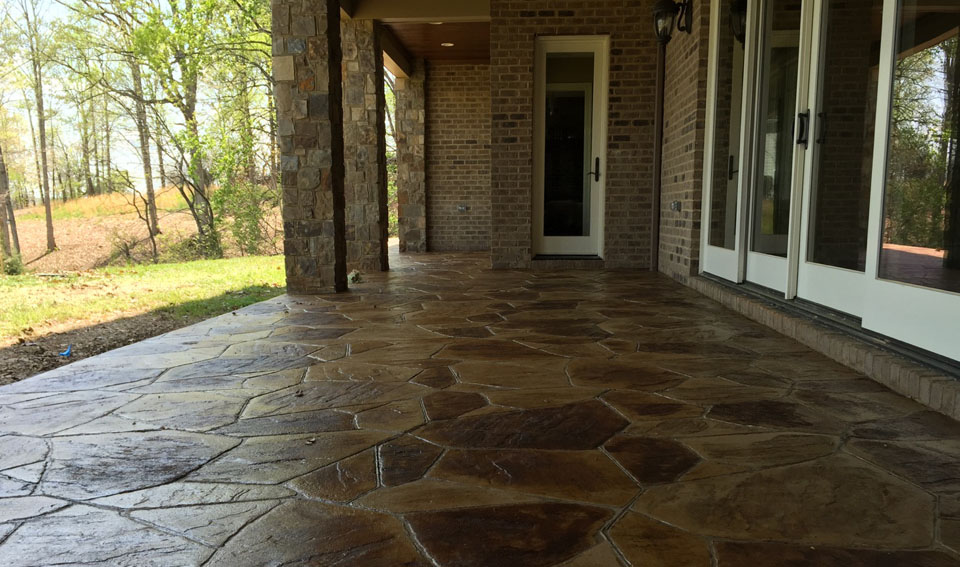

Acid stain can create natural color variation, but it can also be unpredictable, especially on older concrete. In this country-club patio project, Decorative Concrete of Virginia used an acid stain, then added an acetone-based dye to bring the final color closer to the warm orange-brown tone the customer wanted.
A More Controlled Final Color
The 3,000-square-foot patio included older concrete and newer concrete around several pillars. After applying a diluted brown acid stain, the finish did not develop the orange tone the customer expected, and the old and new sections responded differently. Acid-stain color is influenced by the individual slab, which means a chart color cannot guarantee the final result.
To adjust the appearance, the crew applied a UV-stable, acetone-based orange dye with intentional variation. This added a warmer tint while preserving the mottled character of the acid-stained surface. The patio was then sealed with two coats of clear sealer.
Staining Options for Concrete
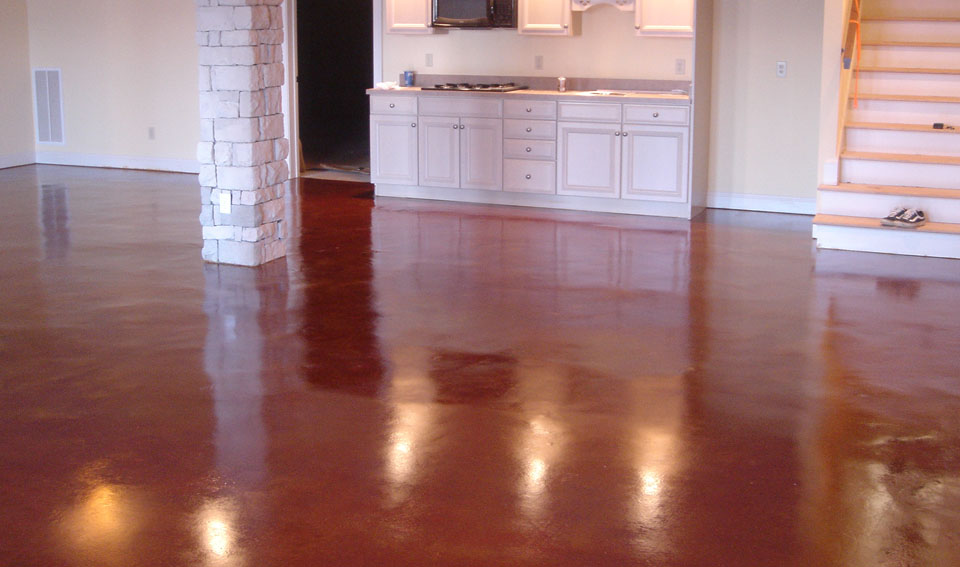
Stained concrete can add color and character to patios, porches, basements, and interior floors. DCVA offers multiple stained concrete options, including acid stain, acetone-based dye, and semi-transparent water-based stain systems.
If you are considering stained concrete, samples are the best way to evaluate the likely finish on your specific slab, particularly when color consistency is important.
Homeowners in Lynchburg and Central Virginia can learn more about DCVA’s stained concrete services or visit Decorative Concrete of Virginia to explore additional decorative concrete options.
Contractors can explore staining and sealing training through Decorative Concrete School. For more project videos, visit the TimDCVA YouTube channel.