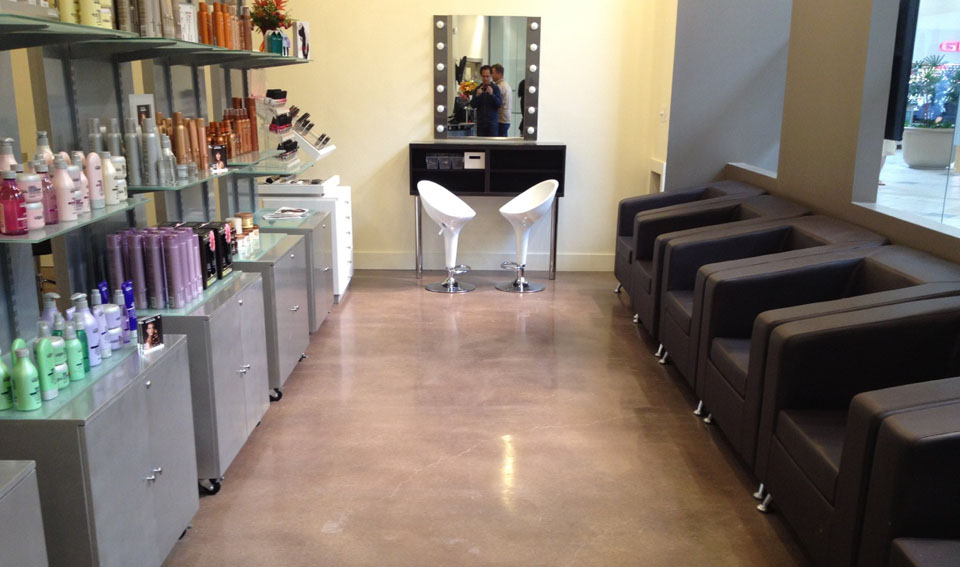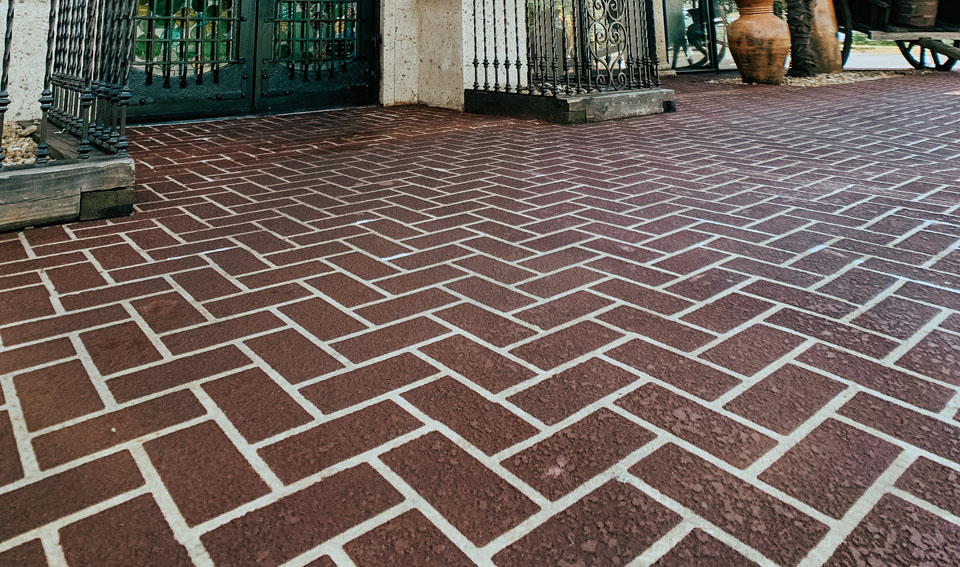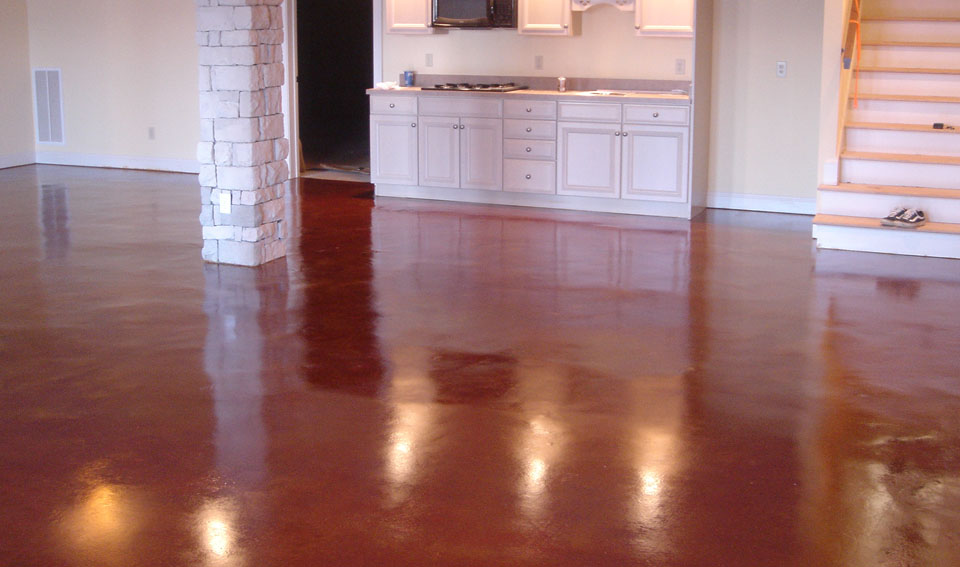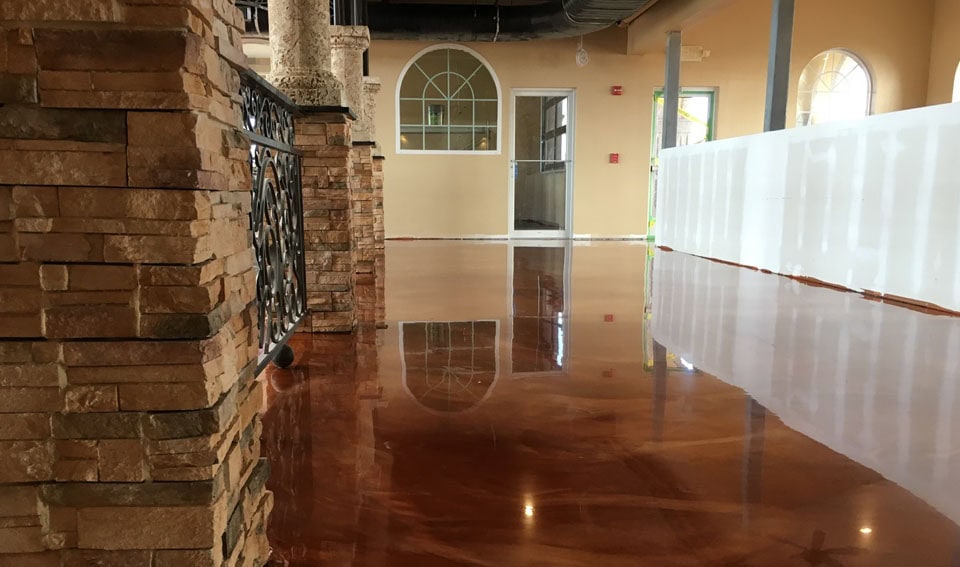

An old warehouse floor can become part of a restaurant’s design. In this project, Decorative Concrete of Virginia removed old tile grout and adhesive, stained the concrete, and added a custom stenciled logo for Ballast Point.
Preparing and Staining the Floor
The crew ground old and new concrete to remove adhesive, grout, and uneven transitions. An acetone-based dye was then sprayed across the floor to create rich color and natural variation.
Unlike acid stain, acetone-based dye does not leave a residue that must be washed away, helping the team complete the color stage more efficiently. Because the material is flammable and produces strong fumes, it requires careful safety measures and ventilation during application.
Adding a Custom Concrete Logo
A vinyl stencil was created for the restaurant logo and carefully applied to the stained floor. Black dye was misted in light layers over the stencil, then the stencil was removed to reveal the finished design.
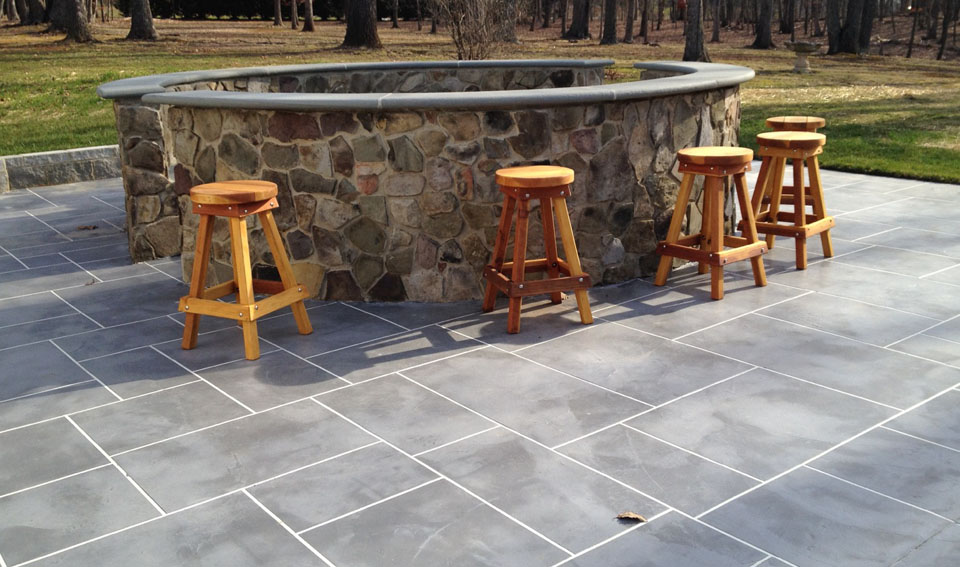
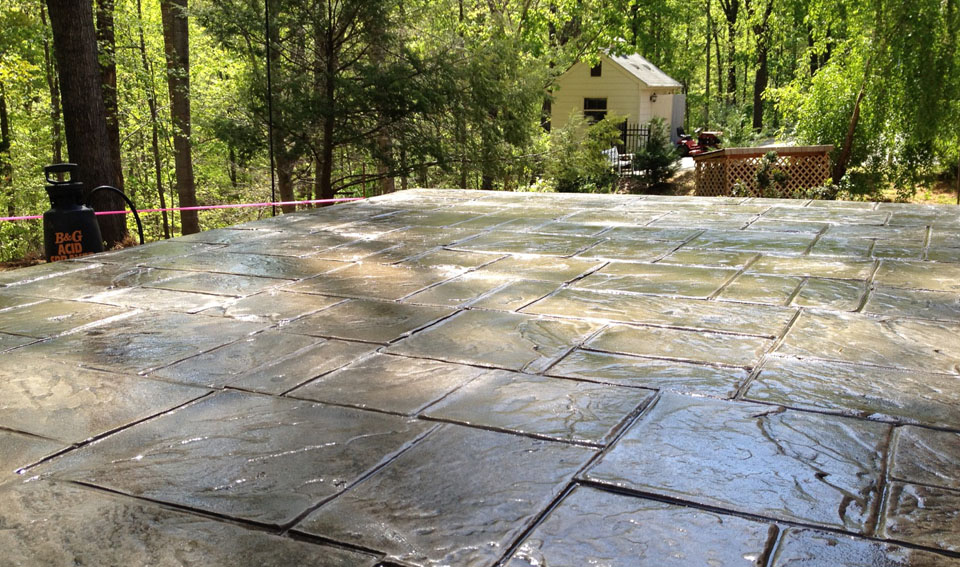
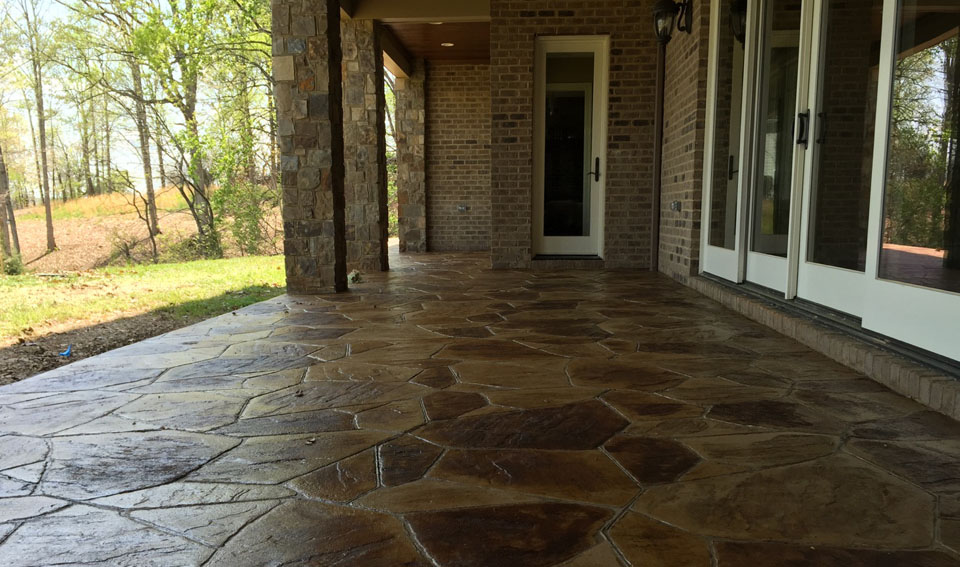
The floor received a water-based epoxy sealer and urethane topcoat for protection. The exterior patio was sealed separately with a solvent-based sealer and later received added grit to improve traction.
Learn More
Stained concrete can bring color, character, and durable protection to restaurants, retail spaces, patios, basements, and more. Homeowners and businesses in Lynchburg and Central Virginia can explore DCVA’s stained concrete services or visit Decorative Concrete of Virginia.
Contractors can learn more about stained concrete and decorative-logo techniques through Decorative Concrete School. For more projects, visit the TimDCVA YouTube channel.